A product catalogue cannot prove that an exporter can reproduce a reliable seal on your bottle, closure and filling line. Use the checks below to compare suppliers, structure a production-representative trial, and approve a bulk order with measurable technical, regulatory and commercial evidence.
Key takeaways
- Request production capacity, equipment details and recent order evidence.
- Test the wad with your exact container, closure and filling process.
- Approve a production-representative trial before releasing the bulk order.
- Require lot traceability, certificates, shipping terms and storage instructions.
Can the exporter prove that it is equipped for your order?
Before technical discussions begin, require documentary proof that the exporter can handle your order, not a promise that it can. Use this sealing wads exporter checklist:
1. Verify the legal business name, registered address, tax identification, export registration, years of export activity, destination markets and production-site address. Ask for monthly production capacity, minimum order quantity, realistic lead time and response time for technical questions.
2. Request a capacity statement tied to your forecast, including monthly volume, shipment schedule and reserved capacity. “We can supply bulk orders” proves nothing without figures matched to your demand.
3. Ask for two or three references from buyers using comparable containers and order volumes. Ask each reference about seal repeatability, late deliveries, complaint handling and document accuracy.
4. Request quality-system documents, inspection responsibility, lot-level traceability and a formal change-notification commitment. Records should identify raw-material lots, coating or adhesive batches, production date, dimensions, inspection results and packing records.
5. Name one contact for engineering questions and another, if needed, for export paperwork. A manufacturer can explain coating batches, dimensional tolerances and production records; a trading company that cannot answer those questions deserves closer scrutiny.
Exporter verification is incomplete until you confirm who inspects each lot, which records accompany shipment and how quickly technical questions receive written answers. Generic certificates and unqualified capacity claims are warning signs, not evidence.
Does the proposed wad match your container and closure?
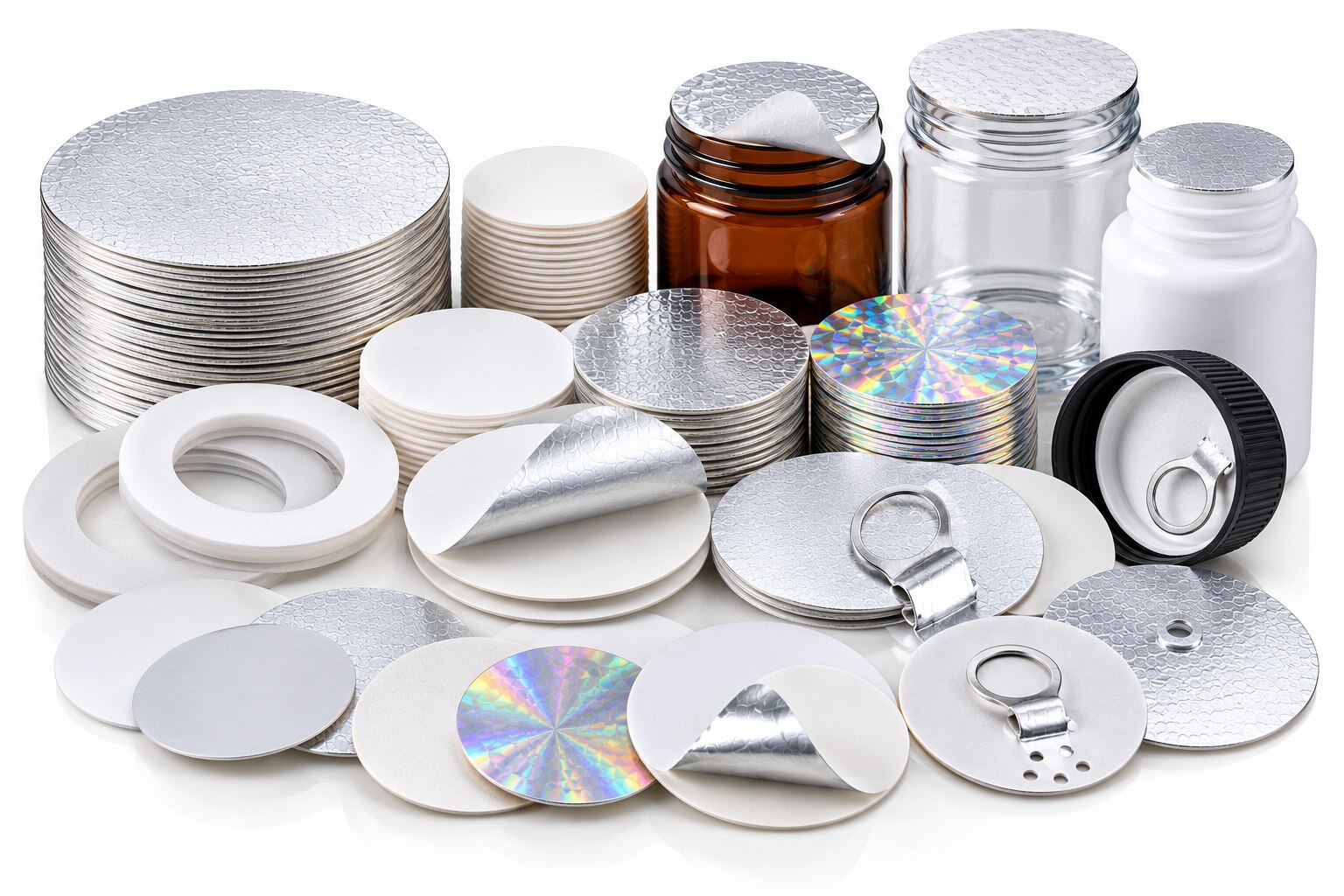
A wad described only as “induction” is not a purchase specification. Require a layer stack-up that names the aluminium foil or metallized layer, aluminium foil thickness, heat-seal coating, adhesive, wax, paperboard or polymer backing, release layer, and whether it is a single-piece or two-piece reseal/release design.
The specification must also state:
- Liner material, diameter, thickness, flatness and dimensional tolerances
- Bottle, jar, tube or drum material; cap material; neck finish; thread geometry; and closure torque
- Compatibility results for the exact package, including container compatibility testing at the intended induction settings
HDPE results do not qualify a liner for PET, PP, glass or fluorinated plastic. Wall geometry and finish tolerances change the contact area, while torque changes compression and peel behaviour.
| Option | Best fit | Wrong choice when |
|---|---|---|
| Induction, single-piece | Tamper evidence and airtight sealing | The consumer must reseal after opening |
| Induction, two-piece reseal | Initial seal plus cap-based resealing | The package needs a pull-tab opening |
| Pull-tab foil | Easy, visible opening | Maximum barrier or child-resistant handling matters |
| Vented or pressure-relief liner | Gas-generating products or pressure control | The pack needs a fully airtight seal |
| Pressure-sensitive, foil-pulp or screw cap | Low-cost application, cushioning, or repeated opening | You need induction-level tamper evidence or a hermetic barrier |
Define minimum and maximum peel behaviour, opening mode and visual acceptance. Excessive bonding can tear the liner or damage the cap; weak bonding causes leaks. Ask for a compatibility matrix tied to your container, closure and torque, not a catalogue claim.
How should you run and approve a production-representative trial?
Approve the wad only after a production trial using the actual container, liner lot, filling product, closure torque and line speed—not a catalogue sample.
1. Request a trial plan stating sample quantity, whether samples are free or paid, the liner production lot, actual bottle and cap samples, filling product, closure torque, pilot-lot size, required tooling, artwork, and who pays for changes.
2. Run the trial on your line, or on equipment matching its machine family. Record liner orientation, sealing-head diameter, frequency or machine family, power or energy, line speed, exposure or dwell time, pressure, capper settings, cooling conditions, and acceptable temperature range.
3. Demand an operating window, not one nominal setting. It must define induction power, frequency, line speed, cap type, dwell conditions, and acceptable temperature or seal-strength limits; a setting that works slowly can create weak seals at higher line speed, while excess power can overheat the liner.
4. Evaluate the machine quotation separately from the liner quotation. Check usable head size, conveyor range, container positioning, cooling duty, reject and interlock functions, and electrical configuration; nominal wattage alone proves little. Surya Products Limited, for example, should be assessed through this integrated trial when discussing both machines and wads.
5. Sign approval only when the pilot lot passes at the actual production line speed and torque across the agreed operating window, with documented container, cap, product and liner-lot identification. Re-test after any artwork, tooling, liner construction or machine change.
Related products
 | Single Piece Induction Wads Keeping track with the latest market developments, we are engaged in offering an extensive range of Induction Sealing Wads. View product → |
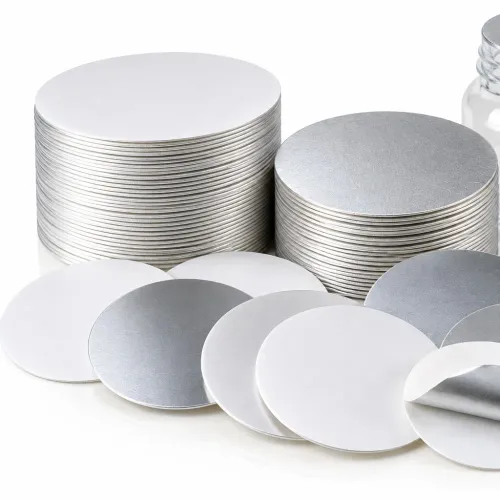
 | INDUCTION SEALING WADS Paperboard, polyethylene and wax made two piece induction wads are reliable options for effective sealing of bottles and containers. View product → |
What evidence should support quality, safety and release of each lot?
Approve a bulk lot only when its release dossier identifies the actual production batch and contains measurable results, not a generic statement of conformity. A certificate of analysis tied to that batch number should agree with the incoming inspection report and packing records.
Request this checklist for every lot:
- Liner diameter and thickness, including tolerances
- Coating coverage and relevant moisture or cleanliness results
- Defined visual-defect limits for wrinkles, pinholes, delamination and contamination
- Seal-strength or peel results, with the test method and sampling plan
- Leak-test results using a gross-leak or package-specific method
- Tamper-evidence checks showing the required opening pattern
- Raw-material, foil, coating, adhesive, production-date and packing-record traceability
ASTM F2029 evaluates heat-sealability; ASTM F88/F88M evaluates seal strength. Neither standard proves that the finished package is leak-tight, so require a separate leak test on your actual container and closure.
Set both lower and upper peel limits. Weak bonding causes leaks and tamper-evidence failure; excessive bonding can tear the liner, damage the cap or container, or remove coating during opening.
| Peel result | Release decision | Risk |
|---|---|---|
| Below minimum | Reject | Leakage or failed tamper evidence |
| Within range | Accept | Controlled opening and adequate seal |
| Above maximum | Reject or investigate | Cap, liner or container damage |
For food contact, request US regulatory compliance or an applicable Food Contact Notification, plus EU Regulation (EC) No. 1935/2004 and Regulation (EU) No. 10/2011 where plastics are present. Obtain a Declaration of Compliance matched to the construction, food simulant, contact time and temperature.
Pharmaceutical primary packaging calls for ISO 15378; terminally sterilized medical-device packaging calls for ISO 11607. Require formal change notification for any foil, coating, adhesive, release-layer or manufacturing-site change.
Which commercial, export and storage terms prevent surprises?
Put the commercial risk in writing before approving volume. Require the quotation and purchase order to name Incoterms 2020, currency, payment timing, delivery point, lead time, and who pays for inspection, bank charges and demurrage.
| Term | Export clearance | Transport risk and insurance | Import clearance |
|---|---|---|---|
| FCA | Exporter | Buyer from handover; buyer arranges insurance | Buyer |
| FOB | Exporter | Buyer after loading; buyer arranges insurance | Buyer |
| CIF | Exporter | Exporter pays freight and insurance to destination port; risk transfers at loading | Buyer |
| DAP | Exporter | Exporter to named destination; buyer bears risk after delivery and import costs | Buyer |
| DDP | Exporter | Exporter to named destination | Exporter, including duties |
Name the commercial invoice, packing list, bill of lading, certificate of origin, customs documents, and destination-country food-contact or pharmaceutical-packaging documents. Request safety data where adhesives, coatings or cleaning chemicals make it relevant.
Write bulk-order acceptance criteria with the sampling frequency, test method, allowable defects, rejection procedure, replacement deadline and freight responsibility. Assign tooling and artwork-change costs, approval rights and formal change notification before production.
Define unused-liner shelf life with the packaging and storage limits: temperature, humidity, sunlight, stacking height, dust and volatile-chemical exposure. Ask how the supplier controls curl, blocking, adhesive change and contamination.
Link every shelf-life claim to packaging, real-time performance data and a production-representative trial. ASTM F1980 can support accelerated aging for sterile barrier systems, but it does not replace real-time aging or package testing.
Frequently asked questions
How can you verify that a sealing wads exporter can handle your order?
Ask for production capacity, equipment details, lead times, quality controls and evidence from comparable bulk orders. Confirm that the quoted output fits your required quantity and delivery window.
What must the exporter check before proposing a sealing wad?
Provide the container material, neck finish, closure type, product formulation, fill temperature and sealing-machine settings. The exporter should match the wad construction and dimensions to those conditions.
How should you approve a sealing wad trial?
Run a trial using your production container, closure, product or a justified substitute, sealing machine and line speed. Check seal integrity, opening performance, leakage, appearance and tamper evidence before approving the specification.
Which documents support quality and release of each wad lot?
Request the approved specification, certificate of analysis, lot number, manufacturing date, inspection results and retained-sample or traceability records. Add safety or food-contact documents when your product and market require them.
Which commercial and export terms should bulk buyers confirm?
Write down the Incoterm, quantity tolerance, payment schedule, packaging, palletisation, documents, insurance, claims period, replacement process and storage conditions. Confirm temperature, humidity and shelf-life limits before shipment.
Related products
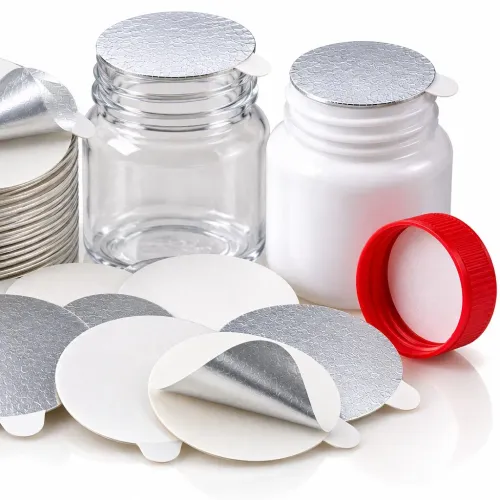
 | Easypeel Wads Aluminum foil based pull tab wad is reliable packaging sealing solution for FMCG, pharmaceutical and edible products. View product → |
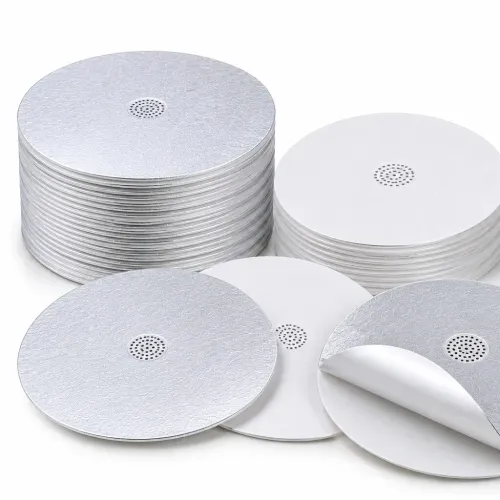
 | Vented Wads Designed as per health safety standard, these vented wads are used as reliable sealing options for HDPE and PET bottles containing chemicals. View product → |
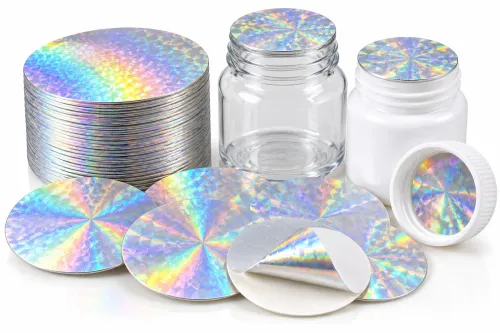
 | Holographic Induction Sealing Wads This is Two peice type induction sealing wads with HOLOGRAM or Holographic printing. View product → |
 | 5/7 Layer Golden Wads We are offering premium quality 7 Layer Golden Wads that can be used in wide range of industries such as food, beverage, cosmetics, pharmaceutical... View product → |