A PET laminated foil is not a single-purpose sheet: its PET, aluminium, adhesive, and sealant layers each control a different packaging function. By tracing those layers through liner conversion, container compatibility, sealing methods, and qualification tests, you can identify where the material fits and specify it without confusing barrier performance with seal performance.
Key takeaways
- PET protects aluminium foil while the sealant bonds the liner to the container.
- Use PET foil laminates where light, oxygen, moisture, and aroma barriers matter.
- Specify container material, neck size, sealant, foil thickness, and filling conditions.
- Test seal strength, leak resistance, barrier performance, and disposal compatibility before launch.
What a PET Laminated Foil Is and What Each Layer Does
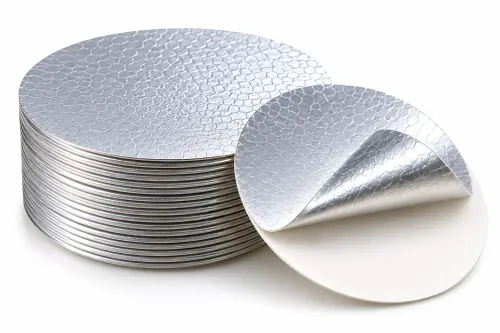
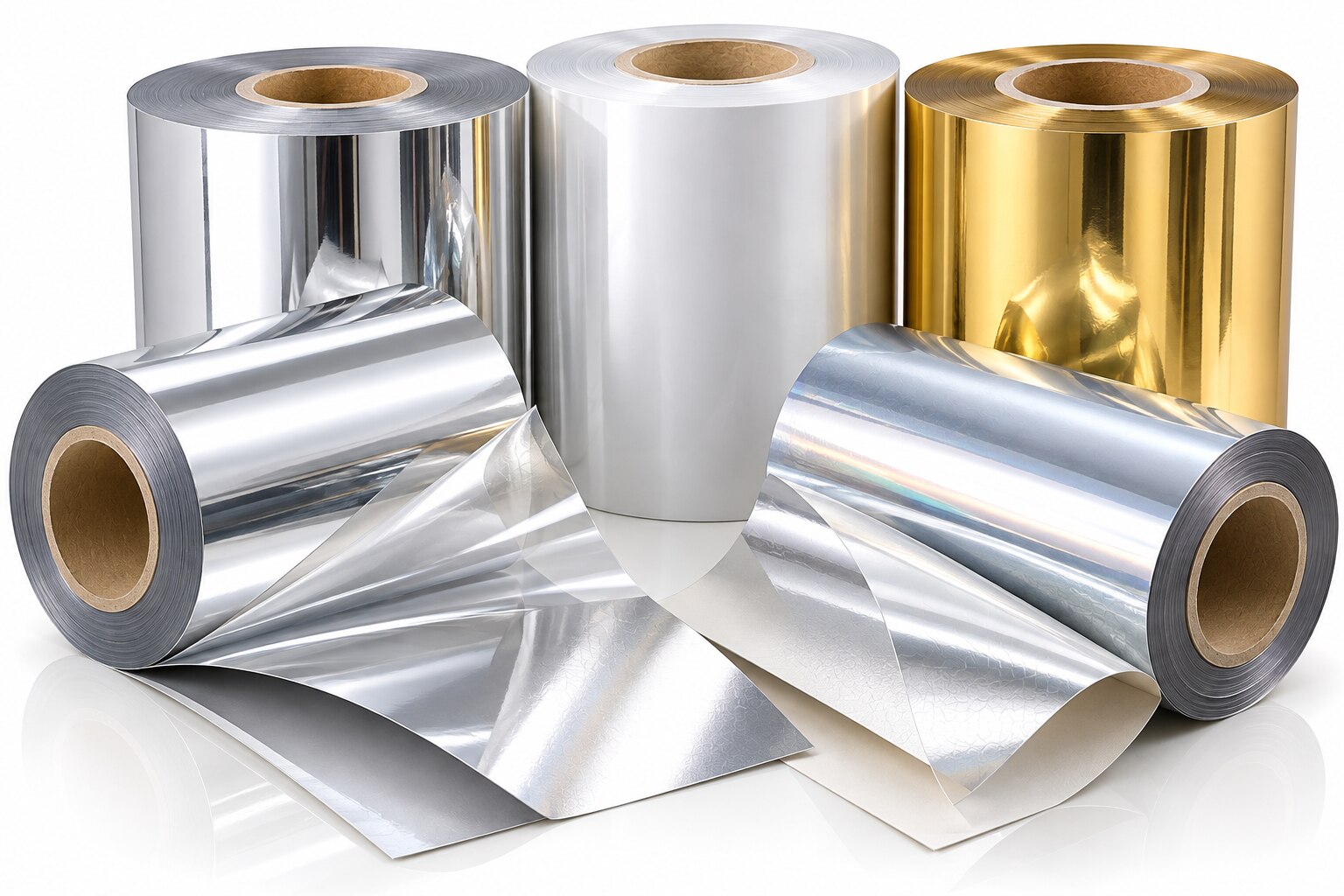
A PET laminated foil combines a PET layer, an aluminium-foil layer, adhesive, and a sealant layer. The PET layer supplies stiffness, printability, dimensional stability, and puncture resistance; it also shields the aluminium during die-cutting and cap handling. The aluminium-foil layer provides the main barrier against light, oxygen, water vapour, and aroma transmission.
Evaluate each layer separately because a strong barrier does not guarantee a compatible seal.
| Option | Main characteristic | Typical trade-off |
|---|---|---|
| Plain aluminium foil | Strong opacity and barrier | Less protection from creasing and handling damage |
| PET film | Stiff, printable, and potentially transparent | Does not match intact foil for light, oxygen, or water-vapour barrier |
| Metallised PET | Lower visual impact with a reflective barrier | Barrier depends on coating continuity and is below intact foil |
| Multilayer plastic film | Polymer layers can combine flexibility and sealing | Barrier and compatibility depend on the exact polymer structure |
| PET laminated foil | PET support with aluminium’s high barrier | Opaque and vulnerable to pinholes or creases |
The adhesive must withstand the product, filling conditions, and storage environment. The sealant layer bonds the liner to the container neck, so its chemistry—not the PET melting point—sets substrate compatibility and seal initiation.
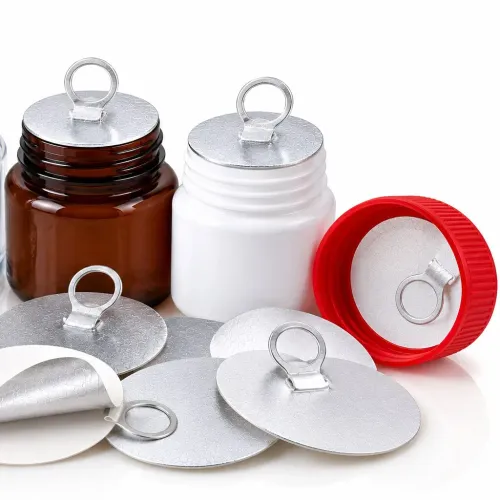
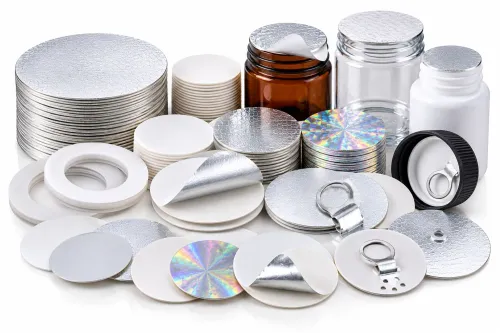
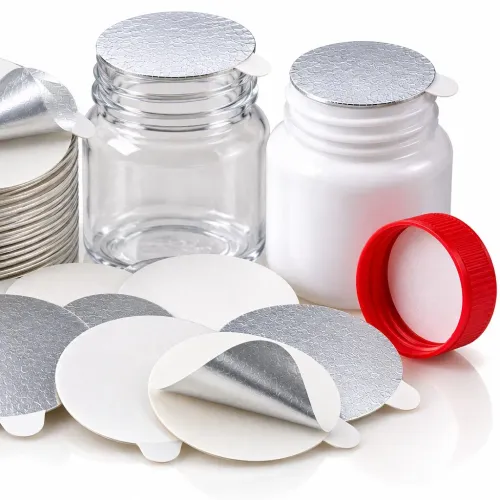
A pulpboard or polymer backing can be added in a two-piece construction: a one-piece liner leaves the seal attached to the closure, while a two-piece liner separates the backing wad from the foil membrane.
Where PET Laminated Foils Are Used Across Packaging Formats
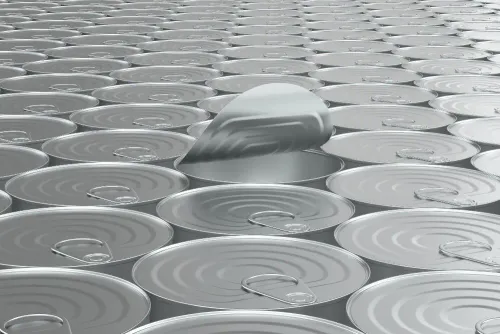
PET laminated foil is used where a package needs stronger control of leaks, light, oxygen, moisture, aromas, contamination, or evaporation. In PET bottles, it becomes induction-seal liners for water, oils, sauces, dressings, and other products that need a sealed neck and barrier protection.
- Pharmaceutical containers use the foil barrier for tablets, capsules, powders, and moisture-sensitive formulations; assess product contact, migration, and stability before approval.
- Nutraceutical jars use it to limit moisture and oxygen exposure around vitamins, powders, and capsules.
- Food and beverage packaging uses foil seals when aroma retention, light exclusion, or oxygen control affects shelf life.
- Cosmetic jars and bottles use them for creams, serums, fragrances, and volatile formulations that require contamination and evaporation control.
- Agrochemical bottles and chemical containers require sealant and adhesive systems matched to aggressive contents, vapour exposure, and chemical resistance.
A bonded membrane can leave visible evidence across the mouth after cap removal, but that feature alone does not establish a validated tamper-evident package. Evaluate the complete closure for visible opening evidence, resistance to reclosure, and whether consumers can recognise interference.
Storage and filling conditions also change the specification. Validate the sealant and adhesive separately for retort, hot-fill, pasteurisation, refrigeration, and ambient storage; heat, cold, or exposure time can alter adhesion, peel force, and leak performance.
How the Laminate Becomes a Liner and Seals to a Container
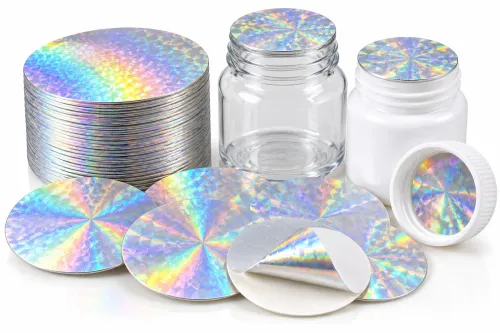
Liner conversion turns roll stock into a closure component. A converter laminates PET, aluminium foil, adhesive, and heat-seal coating, prints or reverse-prints the web when required, slits it to width, and die-cuts discs to the specified liner diameter.
During cap insertion, each disc becomes a one-piece liner or a two-piece liner with a backing wad and foil membrane; the cap then goes onto the filled bottle.
| System | How heat or pressure reaches the seal | Result |
|---|---|---|
| Induction sealing | An electromagnetic coil heats the aluminium; heat passes into the sealant, which wets and bonds to the bottle neck while cap pressure holds contact during cooling | Tamper-evident, bonded membrane |
| Conduction sealing | A heated head transfers heat directly through the closure or liner | Heat-sealed closure without an induction field |
| Cap lining | The liner cushions the interface and seals mainly through compression | Compression seal and improved fit |
| Pressure-sensitive liner | Pressure activates the adhesive; no induction cycle is used | Adhesive bond under applied cap pressure |
| Peelable system | Sealant and construction control opening force and peel behaviour | Controlled, consumer-directed opening |
Induction sealing does not replace torque control. Insufficient compression leaves gaps around the neck; excessive torque can deform the liner or increase peel force until a peelable seal behaves like a destructive seal. Qualify power, dwell, line speed, cap geometry, foil diameter, neck finish, pressure, and product temperature together.
Increasing power alone can overheat the foil, squeeze out polymer, distort the neck, or produce a weak seal.
How to Specify the Right PET Foil Liner Before Ordering
Specify the liner as a system, not as a foil disc. A coating that seals one bottle can fail on another because sealant compatibility, rim geometry, compression, and process settings change together.
1. Match the heat-seal coating to the actual neck substrate: PET, HDPE, PP, glass, or another material. Confirm seal initiation temperature, peel behaviour, chemical resistance, and product-contact compliance. For HDPE and PP compatibility, obtain data for the exact formulation and storage conditions.
2. Put these details on the purchase specification: liner diameter, cap size, PET bottle neck finish, foil thickness, sealant chemistry, adhesive system, backing type, and container material. State whether the liner is one-piece or two-piece. A liner diameter that works on one neck finish can fail on another.
3. Define the bottle and rim condition before trialling. Record rim width, flatness, ovality, permissible chips or warpage, and contamination limits for oil, powder, liquid, and dust. A heated foil still leaks when the rim is narrow, dirty, out of round, or poorly compressed.
4. Set the induction trial around foil diameter, cap geometry, line speed, pressure, product temperature, and dwell time. Do not increase power alone: overheating can cause polymer squeeze-out, neck distortion, or a weak seal.
Require samples tested on your production bottle and cap; Surya Products Limited can help coordinate wad construction with machine settings as one system.
5. Qualify seal strength with ASTM F88/F88M and leak integrity with an appropriate method, including ASTM F2096 for gross leaks. Set acceptance limits before production, not after a failed shipment.
Related product
 | FOIL POLYESTER LAMINATES Fostered with immense years of industry experience and market understanding, we are offering a wide gamut of Foil Polyester Laminates. View product → |
How to Prove Barrier, Seal, and End-of-Life Performance
A sealed liner proves little until you test barrier, integrity, opening behaviour, and performance after use. A strong peel result cannot rule out pinholes, channels, or intermittent rim leaks.
1. Measure barrier on the relevant structure. Use ASTM D3985 for oxygen transmission and ASTM F1249 for water-vapour transmission when oxygen or moisture protection matters. Test the finished packaging when the closure, bottle, and product could change performance.
2. Test seal strength and leakage separately. Use ASTM F88/F88M for seal strength, ASTM F1929 for dye penetration in porous packaging where applicable, and ASTM F2096 for gross leaks by internal pressurisation. Define acceptance limits before production; do not treat a high seal-strength value as proof of leak-free sealing.
3. Validate the complete package after its intended exposure: retort, hot-fill, pasteurisation, refrigeration, or ageing. For medicines and medical products, use ISO 11607 to qualify the packaging system, sealing process, distribution stresses, and stability period—not the laminate alone. Record closure torque, opening force, reclosure behaviour, and consumer-visible tamper evidence.
4. Judge end-of-life from the complete bottle-and-closure design. Aluminium foil and sealant bonded to PET or a closure can complicate sorting, while detached fragments can enter recycling streams. Check the rules and capabilities of the local recycling system before making a recyclability claim.
Frequently asked questions
What does each layer in a PET laminated foil do?
PET provides stiffness, printability, dimensional stability, and puncture resistance. Aluminium foil blocks light, oxygen, water vapour, and aromas. Adhesive bonds the layers, while the sealant bonds the liner to the container.
Where are PET laminated foils used?
They are used in packaging formats that need strong light, oxygen, moisture, and aroma barriers, including container liners and induction-sealed packs.
How does PET laminated foil become a container liner?
The laminate is converted into a die-cut liner, placed in the closure, and sealed to the container finish through a controlled sealing process. The sealant must match the container material.
What should you specify before ordering a PET foil liner?
Provide the container material, neck diameter, closure design, product compatibility requirements, sealant type, laminate construction, filling conditions, and required sealing-process parameters.
How do you verify PET foil liner performance?
Test the finished pack for seal strength, leaks, tamper evidence, barrier performance, dimensional fit, and compatibility with the intended disposal or recycling route.