A sealing wad is only as reliable as the complete package system and the controls behind it. By the end, you will have a supplier-audit checklist, a lot-document request, measurable acceptance criteria and a qualification-trial plan for your own container, closure and product.
Key takeaways
- Audit production controls, material records, inspections, and release decisions before comparing samples.
- Request lot numbers, material specifications, test reports, and written acceptance limits.
- Test the wad with your exact container, closure, product, torque, and sealing equipment.
- Measure leak integrity, seal strength, and tamper evidence instead of judging appearance alone.
Audit the factory before comparing samples
A successful sample proves only that one wad worked once; consistent lots require records connecting materials, settings, inspections, and release decisions. Make factory inspection part of your supplier evaluation checklist, not an optional visit after approval.
1. Ask to see the quality system: approved specifications, revision control, training records, deviation handling, corrective actions, and documented change control. A supplier that changes foil, sealant, adhesive, release coating, backing, dimensions, or winding direction without notification can change sealing performance under the same product name.
2. Trace one finished lot backward to raw-material batch numbers, production date, machine and operator records, die-cut dimensions, alignment checks, coating coverage, foil-pinhole inspection, wrinkle and edge-damage checks, contamination checks, and print-registration results.
3. Review calibration records for thickness gauges, scales, vision systems, seal-strength testers, leak testers, and induction equipment. Expired calibration makes attractive inspection numbers worthless.
4. Ask how final release works. Require a certificate of analysis, dimensional inspection report, visual inspection record, seal-strength results, and any nonconformance report for each lot, with a named approver and acceptance limits.
5. Request evidence from several consecutive lots, not one certificate. Compare thickness, liner alignment, peel force, and defect rates against the same specification revision, then check whether retained samples and shipment labels preserve lot traceability.
A factory earns confidence when it reproduces results across lots and explains every exception. Do not approve a sealing wads manufacturer that cannot show controlled records for the exact liner construction and package combination you will buy.
Specify the lot documents and acceptance limits
Do not release a wad lot on appearance alone. Require a lot-specific certificate of analysis and these records before acceptance:
- Batch traceability linking the shipment to foil, sealant, adhesive, release coating, pulp, die-cutting date, production date, specification revision, and approved change record.
- A dimensional inspection report covering outside diameter, thickness, liner alignment, die-cut profile, and winding direction.
- Seal-strength results identifying ASTM F88/F88M procedure, test direction, peel speed, conditioning, sample locations, and the buyer’s approved force range.
- Visual inspection records for foil pinholes, coating coverage, wrinkles, edge damage, print registration, contamination, and rejected quantity.
- Any nonconformance report, including root cause, disposition, and evidence that affected material was segregated.
Write measurable limits into the purchase specification, not “commercially acceptable.”
| Characteristic | Example acceptance limit to set | Automatic hold or rejection |
|---|---|---|
| Diameter and profile | Drawing dimension ±0.25 mm, unless your cap requires tighter control | Any piece outside the approved drawing |
| Thickness | Target ±10%, with separate limits for each construction layer | Out-of-range average or layer omission |
| Foil pinholes and contamination | Zero visible pinholes, embedded particles, or exposed adhesive | Any critical defect |
| Alignment and edge condition | No liner overhang; no cuts, tears, edge curl, or delamination | Any defect that reaches the sealing area |
| Seal strength | Buyer-defined minimum and maximum force for peelable liners; continuous bond for weld-seal liners | Any failed test or out-of-range result |
Require lot sampling, sample size, and acceptance number in advance. A peelable liner and a weld-seal liner need different limits; never accept a generic “induction liner” specification.
Validate the wad against your complete package system
Do not approve a wad from a generic seal sample. Prove induction sealing validation on the exact bottle, cap, product, liner, induction coil and production line that will run the package.
Confirm sealant compatibility with the container resin and neck finish before testing. The sealant must bond to the bottle’s contact surface without becoming brittle, peeling inconsistently or losing adhesion when exposed to the product. Clean and deliberately contaminated containers reveal whether dust, labels, additives or product residue create channels.
Run the trial using the actual closure system and record:
- Container dimensions, resin, neck finish and cap geometry
- Wad construction, sealant type and liner orientation
- Cap torque, measured on the line at defined minimum and maximum limits
- Coil-to-cap distance, generator frequency, power, conveyor speed and dwell time
- Minimum and maximum container, cap and wad tolerances
- Clean and realistic product-contamination conditions
Do not transfer a supplier’s quoted wattage or dwell time to another machine. Coil geometry, shielding, frequency and package dimensions change the energy delivered to the liner, so record every qualified setting against one machine and configuration.
Inspect seal continuity and peel behaviour, then test unopened packages for leaks. ASTM F2338 vacuum-decay testing can support nondestructive checks, but use a package-specific fixture and detection threshold; a portable instrument’s generic pass setting proves little. Repeat the trial across the operating range, not only at the easiest nominal setting.
Run a qualification trial that measures integrity, not appearance
A successful supplier qualification trial challenges the seal window, not one ideal machine setting. Run production packs at minimum and maximum line speed, application torque, induction power, and realistic product contamination levels. Include container and cap tolerances; a seal that survives only perfect components is not qualified.
Record the trial conditions and repeat them across representative samples:
- Use the lowest and highest approved line speeds and induction settings.
- Test low and high application torque, plus the actual bottle, cap, wad, and product combination.
- Include clean seals and controlled contamination such as product on the sealing land.
- Sample packs from the start, middle, and end of the run, then repeat after a planned hold period.
- Define acceptance limits for continuous bonding, leak performance, peel behaviour, and appearance before testing begins.
Use ASTM F88/F88M to measure seal strength at specified locations, direction, peel speed, and conditioning. The standard gives you force data; it does not set your acceptable minimum or maximum. A high peel force can still hide a channel, while an easy, even peel can be the correct result for a peelable liner.
Use ASTM F2096 for gross-leak detection by internal pressurisation and bubble emission, but document the detectable leak size because it does not prove freedom from smaller leak paths. Add ASTM F2338 vacuum-decay testing when packs must remain unopened; validate the package-specific fixture and detection threshold.
Open samples for destructive inspection: wrinkles, foil lifting, edge curl, or intact-looking foil can conceal incomplete bonding. A barrier result does not replace these integrity tests.
Use the results to define custom requirements and ongoing control
Select the supplier whose results stay inside your limits across repeat runs, not the one with the strongest single seal. Compare equivalent bottle, cap, product, machine, and settings; a quoted dwell time is meaningless when coil geometry or conveyor speed changes.
| Criterion | Supplier evidence to compare | Decision |
|---|---|---|
| Seal function | Clean peel and tamper evidence for a peelable liner; continuous bond and maximum bond strength for a weld-seal liner | Reject suppliers offering one construction for both objectives |
| Lot control | Material lot, production date, specification revision, inspection results, and documented change-control record | Prefer traceability to every shipment |
| Compliance | Component-specific declaration covering sealant, adhesive, foil, backing, coatings, intended food, temperature, contact time, and reuse | Reject “FDA compliant” claims without use limits; for EU sales, check Regulation (EC) No 1935/2004 and Regulation (EU) No 10/2011 where plastics apply |
A supplier such as Surya Products Limited should be judged against this evidence rather than its catalogue description or a generic induction setting.
Convert the winning trial into a signed specification containing:
- Wad construction, dimensions, thickness, alignment, foil pinhole limit, coating coverage, edge condition, and approved materials
- Required outcome: clean peel, reseal capability, tamper evidence, venting, or maximum bond strength
- Machine identification, coil, power, dwell time, line speed, cap-to-coil distance, and product temperature
- Seal-strength range, destructive inspection method, leak-test method, sampling plan, and lot-release documents
- Food-contact compliance documents and written approval before any change to foil gauge, adhesive, sealant, coating, backing, die-cut size, or winding direction
Requalify after each approved change, not only after a failure.
Related products
 | Single Piece Induction Wads Keeping track with the latest market developments, we are engaged in offering an extensive range of Induction Sealing Wads. View product → |
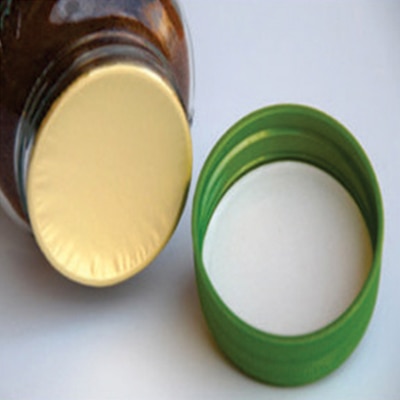 | INDUCTION SEALING WADS Paperboard, polyethylene and wax made two piece induction wads are reliable options for effective sealing of bottles and containers. View product → |
Frequently asked questions
What should you inspect before comparing sealing wad samples?
Inspect the factory’s material traceability, production settings, in-process checks, final inspections, and release records before comparing samples.
Which documents and acceptance limits should you request for each wad lot?
Request the lot number, material specification, certificate or test report, production date, inspection results, and written limits for dimensions, seal strength, and defects.
How do you validate a sealing wad against a complete package system?
Test it with the actual container, closure, product, application torque, induction equipment, sealing settings, and storage conditions.
How should a qualification trial measure sealing performance?
Measure leak integrity, seal strength, tamper evidence, liner removal, and performance after handling or storage rather than relying on visual appearance.
Related products
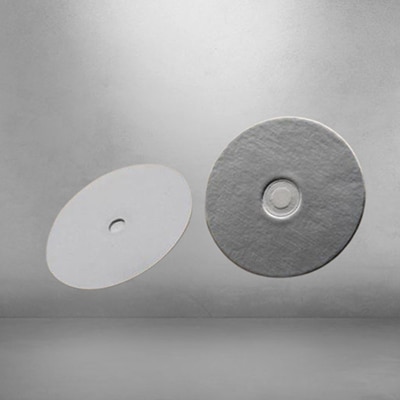 | Vented Wads Designed as per health safety standard, these vented wads are used as reliable sealing options for HDPE and PET bottles containing chemicals. View product → |
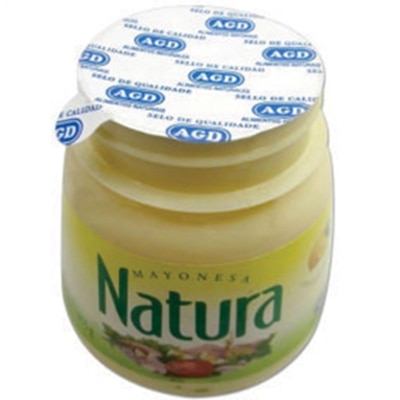 | Easypeel Wads Aluminum foil based pull tab wad is reliable packaging sealing solution for FMCG, pharmaceutical and edible products. View product → |
 | Holographic Induction Sealing Wads This is Two peice type induction sealing wads with HOLOGRAM or Holographic printing. View product → |
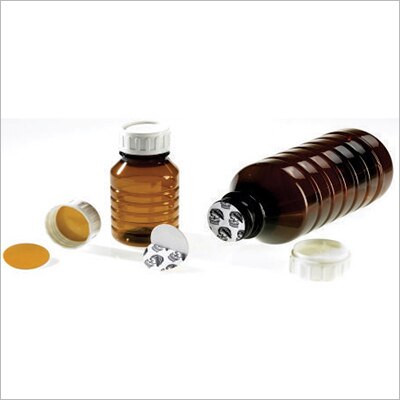 | 5/7 Layer Golden Wads We are offering premium quality 7 Layer Golden Wads that can be used in wide range of industries such as food, beverage, cosmetics, pharmaceutical... View product → |