The right bottle seal depends on more than bottle material or foil thickness. You need to match the seal construction to the product, container neck, closure, filling process, transport conditions, opening experience, and required package-integrity evidence.
Key takeaways
- Select the liner construction before specifying sealing equipment.
- Match liner materials to the bottle resin and product chemistry.
- Check neck finish, cap fit, temperature, dwell time, and line speed together.
- Define leak, peel, barrier, and tamper-evidence acceptance tests before production.
Choose the seal construction before choosing the equipment
Choose the seal construction that matches both the product’s pressure behaviour and the opening experience you want, then select equipment that can apply it consistently.
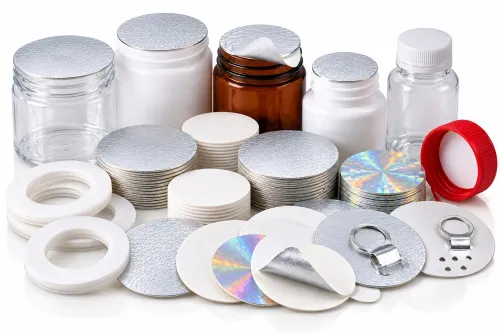
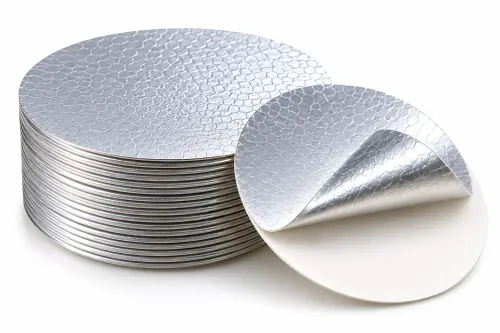
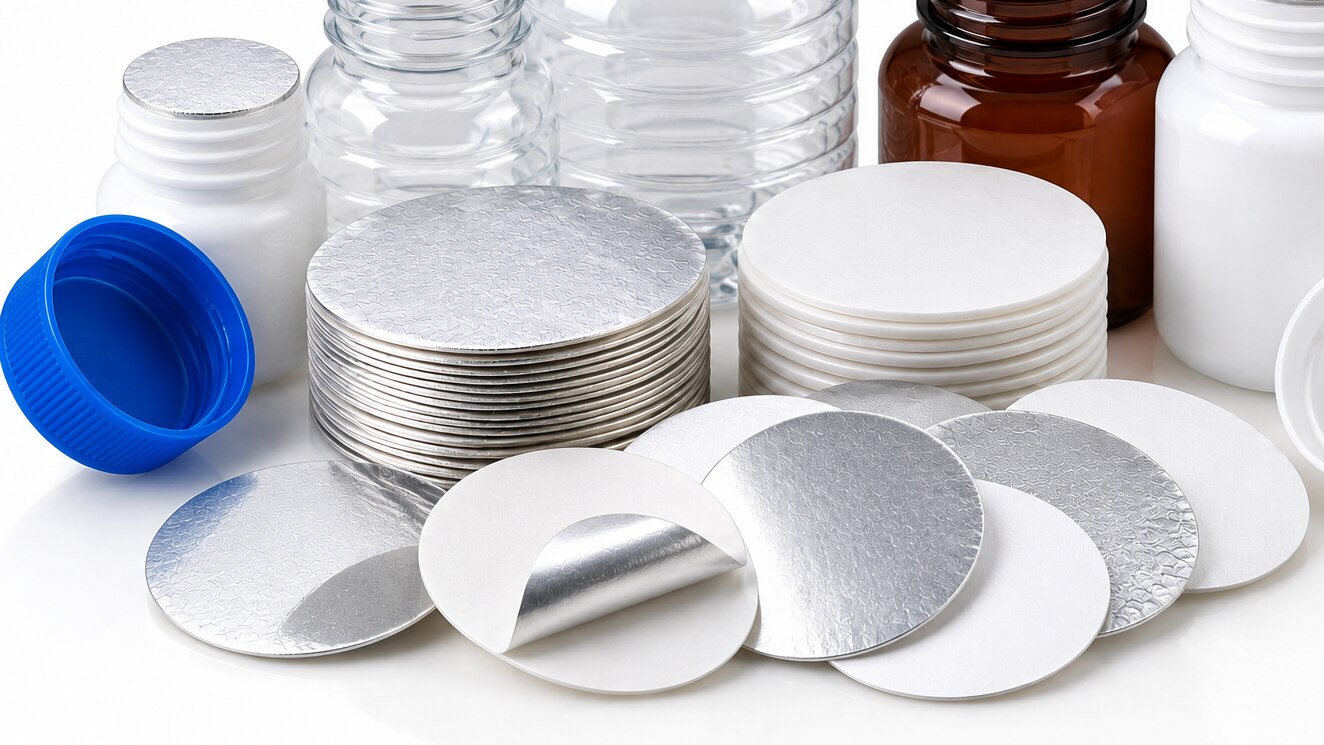
A single-piece induction wad creates a sealed barrier that stays on the bottle after the cap is removed; a two-piece induction wad leaves a backing layer in the closure, which can make cap handling cleaner.
| Construction | Opening experience | Best fit and limitation |
|---|---|---|
| single-piece induction wad | Peel, tear, or remove the bonded foil | Efficient for leak protection and tamper evidence; confirm how the remaining seal is removed |
| two-piece induction wad | Remove the foil while the backing remains in the cap | Useful when a clean cap interior matters; validate separation during transport |
| pressure-sensitive liner | Lift or peel without induction equipment | Suitable for dry, low-risk products; it offers less robust barrier protection than a correctly applied induction seal |
| pull-tab seal | Grip a tab and remove the seal deliberately | Good for consumer convenience; specify and measure opening force rather than relying on “easy-peel” wording |
Choose a peelable seal when consumers need predictable access and the bottle finish must not be damaged. Choose a weld-seal construction when permanent adhesion and barrier strength take priority. Test opening force on filled, aged packs; the liner name alone does not prove usability.
Use a vented or pressure-relief liner for gas-generating products, hot-filled products that cool, or packs exposed to altitude changes. An unvented hermetic seal can cause liner lift, bottle paneling, or cap deformation despite passing an initial leak check.
Foil is only one layer of the system. The heat-sealable polymer bonds to the bottle, while foil pinholes, score lines, liner edges, the cap, and the bottle itself determine actual barrier performance. An induction seal also does not automatically satisfy tamper-evident rules; verify the complete closure against the requirements of the target market.
Match the liner to the bottle resin and the product chemistry
Start with the container-contact layer, not the foil. A PET bottle seal needs a PET-compatible sealant; an HDPE liner normally uses a polyethylene contact layer, while a PP sealant is selected for polypropylene. Glass requires a sealant validated for glass. A liner that seals to one polymer is not automatically suitable for another.
| Container | Contact layer to evaluate | Main risk if mismatched |
|---|---|---|
| PET | PET-compatible sealant | Weak bonding or peel failure |
| HDPE | PE sealant layer | Incomplete wetting or leaks |
| PP | PP sealant | Poor adhesion after induction |
| Glass | Glass-compatible sealant | Brittle or inconsistent seal formation |
Confirm compatibility with the actual filled pack through a controlled trial:
- Use the finished product at its intended concentration, including oils, solvents, alcohols, acids, surfactants, essential oils, or concentrated actives. Water or a simple laboratory simulant cannot clear the liner for a chemically aggressive formula.
- Run the actual bottle, cap, liner, fill temperature, induction settings, and storage duration. Include the lowest and highest expected storage temperatures.
- Inspect seals for softening, swelling, embrittlement, delamination, foil lift, wrinkles, and leaks; inspect PET, HDPE, PP, or glass for stress cracking and deformation.
- Check seal strength and opening performance after storage, not only immediately after sealing.
The aluminum foil in an induction liner generates heat; the polymer contact layer must melt, wet the neck land, and remain bonded. Test the complete liner, because a thermally stable foil cannot rescue a sealant that overheats, fails to melt, or degrades in the product.
Treat neck geometry, cap fit, and process settings as one system
Dimensions determine whether the liner contacts the sealing land evenly, so a powerful induction cycle cannot rescue a poor bottle-and-closure fit. The neck finish, cap diameter, liner diameter, thread design, land width, and ovality must work together to maintain compression while the sealant layer melts and wets the container.
1. Measure the actual neck finish, including land width, bead profile, finish diameter, and ovality. Compare these measurements with the cap and liner drawings, then check production tolerances rather than relying on nominal dimensions.
2. Confirm that the liner diameter covers the land without extending into unsupported areas. A liner that is too small creates channels; one that is too large can wrinkle, catch on the threads, or leave foil unsupported at the edge.
3. Apply the cap with the intended capping head and torque range. Check liner retention, cap seating, thread engagement, and compression on filled containers, because a loose cap or distorted thread can produce inconsistent seals across the line.
4. Run trials using the actual bottle, cap, liner, fill level, and line speed. Record induction-head geometry, head-to-closure gap, power, and dwell time; settings copied from another package are not transferable.
Keep the sealing land clean. Product, oil, dust, or powder trapped under the liner creates channel leaks, and raising induction energy can burn the product or damage the liner without fixing contamination. Inspect opened samples for complete adhesion, wrinkles, edge gaps, and unsupported foil before approving the setup.
Adapt the seal to the application, pressure conditions, and opening needs
A hermetic seal suits products that must stay isolated from oxygen, moisture, microbes, or leakage, while a vented seal or pressure-relief liner suits packs that build internal pressure.
Match the opening force to the user: pull-tab or easy-peel liners improve access, while two-piece induction wads add a removable seal layer without leaving foil attached to the cap.
| Application | Suitable seal choice | Key decision |
|---|---|---|
| Pharmaceuticals | Hermetic induction seal, often with pull-tab | Confirm product-contact compliance, barrier needs, and tamper-evidence rules |
| Chemicals and agrochemicals | Chemical-resistant hermetic liner; pressure-relief liner for gas-generating contents | Test sealant resistance, vapour exposure, and pressure accumulation |
| Food and beverages | Hermetic seal for ambient products; vented seal for hot-fill packaging or cooling pressure | Validate the complete temperature profile and product-contact layers |
| Cosmetics | Hermetic, easy-peel, or pressure-sensitive liner | Balance leakage protection with clean opening and dispensing |
| Oils | Hermetic foil or compatible non-induction liner | Check oil migration, sealant compatibility, and long-term adhesion |
| Powders | Hermetic seal with dust-resistant sealant and strong neck coverage | Prevent wicking through powder contamination at the land |
| Liquids | Hermetic induction seal or pressure-sensitive liner | Match barrier strength to leak risk, shipping orientation, and opening force |
Hot-fill packaging, pasteurization, sterilization, and retort cycles can curl foil, blister adhesive, or destroy adhesion after a room-temperature leak test passes. For products that generate gas or face altitude changes, an unvented hermetic liner can deform the cap or lift the liner; controlled venting avoids that failure.
Check inks, adhesives, coatings, and sealant layers as product-contact materials, not only the foil, and confirm that the complete closure system meets local tamper-evident requirements.
Validate barrier performance and define acceptance criteria
Do not approve a seal because it peels cleanly or survives a hand check. Define measurable limits for seal strength, leakage, barrier performance, opening force, and durability, then test filled production packs at the process extremes.
1. Measure seal strength with ASTM F88/F88M on representative peelable seals. Set a minimum force, maximum force, and acceptable failure mode: cohesive liner separation is different from adhesive failure, channel leakage, or tearing the bottle finish.
2. Run package integrity testing on the complete bottle, liner, cap, and closure interface. ASTM F2096 pressurizes the package to detect gross leaks; it does not prove oxygen or moisture shelf life.
For sterile or high-value products, use a method suited to the defect risk, such as vacuum decay, pressure decay, high-voltage leak detection, or laser headspace analysis, following USP <1207>.
3. Test barrier performance after filling, capping, transport simulation, temperature cycling, and accelerated or real-time aging. Check foil pinholes, score lines, liner edges, cap fit, and the bottle itself; a foil layer alone does not establish the package’s oxygen, moisture, or aroma barrier.
4. Record opening force, tamper evidence, seal continuity, and failure rates at minimum and maximum induction power, line speed, cap torque, and neck tolerances. Do not claim legal tamper-evident compliance from a liner alone.
Surya Products Limited can support a meaningful trial by testing the selected wad on the actual bottle and process settings, rather than approving a sample in isolation.
Related products
 | Vented Wads Designed as per health safety standard, these vented wads are used as reliable sealing options for HDPE and PET bottles containing chemicals. View product → |
 | Automatic Induction Sealing Automatic Induction Sealing Machine This is Automatic Induction Sealing machine used to seal All types of bottle and containers. View product → |
Frequently asked questions
Should you choose the seal construction or equipment first?
Choose the seal construction first, based on product pressure behaviour and the required opening experience, then select equipment that applies it consistently.
How do you match a bottle seal to the container and product?
Check the liner against the bottle resin, product chemistry, storage conditions, and required barrier performance before approval.
Which packaging variables affect sealing performance?
Neck geometry, cap fit, liner placement, induction power, sealing time, line speed, and container pressure work as one system.
How should seal requirements change by application?
Adapt the seal to pressure conditions, leak and contamination risks, barrier needs, tamper evidence, and whether consumers need easy or difficult opening.
What should you test before approving a bottle seal?
Define acceptance criteria for seal continuity, leaks, peel force, barrier performance, tamper evidence, and performance after storage and transport.
Related products
 | Glass Seals We have gained immense recognition in the industry for offering quality assured Glass Seals. View product → |
 | Manual Induction Sealing Machine Manual Portable Sealing Machine This is very portable induction sealing machine, Used to seal bottles and Jars from size 20mm to 120mm. View product → |
 | Glass Jar Seals This is Two peice type Sealing wads for all type of Glass Bottles , Jars & container for Coffee Jars , Pickles , Jams , Ghee etc View product → |
 | INDUCTION SEALING WADS Paperboard, polyethylene and wax made two piece induction wads are reliable options for effective sealing of bottles and containers. View product → |